Cultural tourism and living heritage in Uzbekistan
Uzbekistan is one of the great treasures of the world of the Silk Road and an essential destination for those seeking cultural tourism, historical tourism and travel with identity. In this Central Asian country, history is not found only in books: it is breathed in the streets, contemplated in the turquoise domes, discovered in the ancient madrasas and felt in every square, bazaar and monument. From monumental cities to archaeological sites, Uzbekistan offers a unique journey through centuries of cultural heritage, Islamic architecture, medieval science, decorative art and traditions that continue to live today.
🎓 Educational tourism
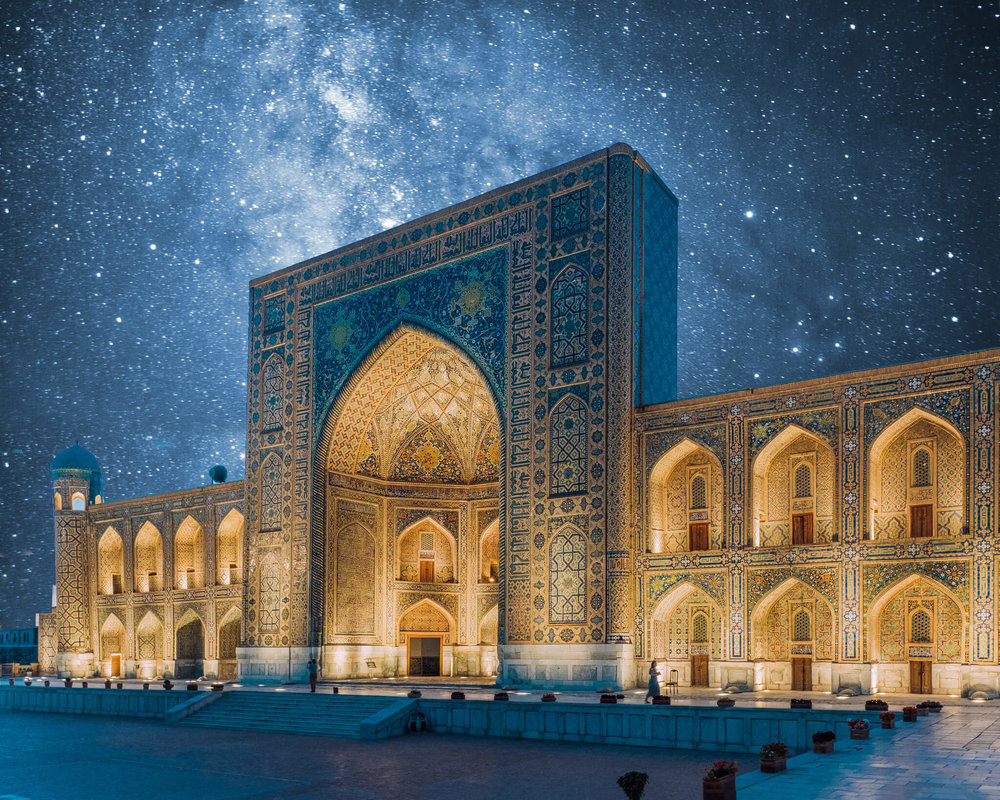
Uzbekistan has become a reference for educational tourism in Central Asia because it allows learning, travel and real experience to be combined in a single journey. Here, studying does not mean staying within four walls: it means walking through ancient centers of knowledge, observing centuries-old inscriptions, understanding the history of the Silk Road and discovering how merchants, scientists, theologians, artisans and travelers from different worlds lived together for centuries.
With more than 7,000 historical and cultural sites, the country offers an exceptional setting to learn about world heritage, Islamic architecture, medieval astronomy, Central Asian civilizations and the transmission of traditional crafts. Historic cities such as Samarkand, Bukhara, Khiva and Shahrisabz function as authentic open-air classrooms, where every building, dome, portal and mosaic helps to better understand the cultural weight of this region.
This type of trip is especially valuable for students, teachers, cultural groups, researchers and curious travelers who want more than a superficial visit. Cultural tourism in Uzbekistan invites deeper exploration: to study urban evolution, religious life, decorative art, the importance of caravans and the role of education in the great cities of the Silk Road.
In addition, many itineraries include practical learning experiences such as ceramics workshops, silk embroidery, handmade paper, traditional cooking or wood carving. This turns the journey into a complete experience, where the visitor not only observes the heritage, but participates in it and better understands its human, historical and cultural value.
🏛️ National and regional museums
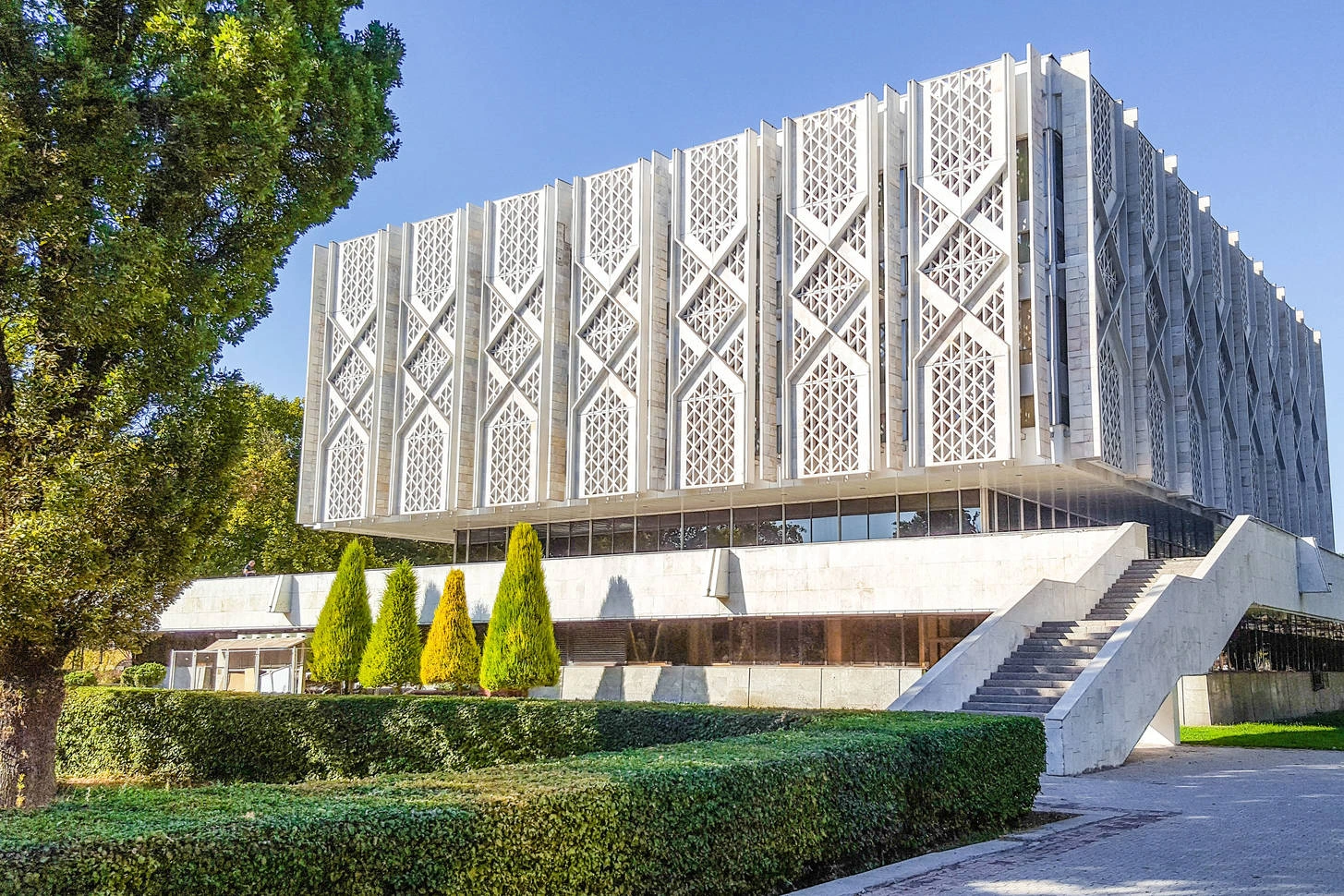
To speak about museums in Uzbekistan is to speak about one of the richest cultural networks in all of Central Asia. The country has more than 400 museums spread across major cities, historic regions and specialized centers, which allows the traveler to perfectly complement visits to monuments with a deeper view of its history, art and everyday life.
The State Museum of History brings together archaeological materials, manuscripts, ceramics, coins, ritual objects and testimonies that help to understand the formation of the territory and the evolution of the cultures that passed through this part of the Silk Road. In addition, there are spaces dedicated to decorative art, ethnography, craftsmanship and urban memory, all essential for anyone who wants to know Uzbekistan beyond its most famous postcards.
One of the most celebrated cases is the Savitsky Museum in Nukus, internationally known as “the Louvre of the desert”. Its prestige is due not only to its extraordinary collection of Soviet avant-garde art, but also to the cultural value of having preserved unique works that today place Uzbekistan on the world map of 20th-century art.
For the traveler interested in cultural tourism, museums offer context and depth: they make it possible to understand how artisans lived, what decorative motifs symbolized, how trade exchanges were organized and what role religion, science and politics played in the development of the country’s historic cities.
📜 Historical and archaeological tourism
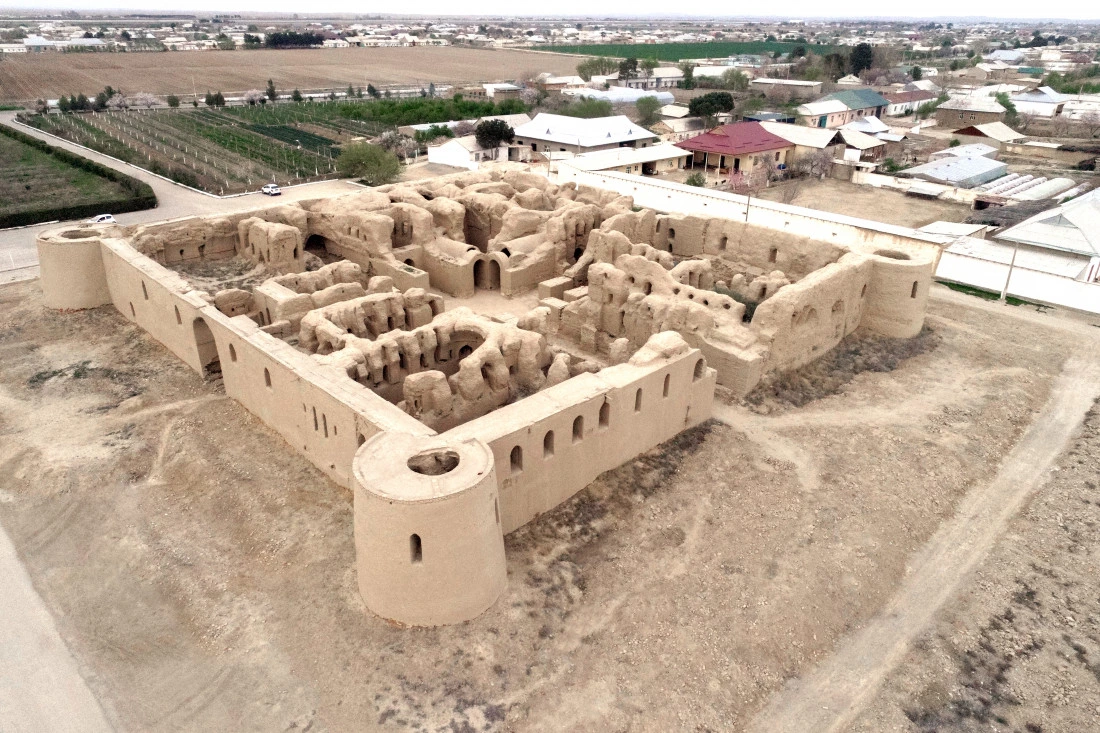
Historical and archaeological tourism in Uzbekistan allows visitors to discover layers of civilization spanning thousands of years. Here, the past is not presented as a distant and closed story, but as a visible landscape that remains present in fortresses, ruins, ancient settlements and cities that have maintained their relevance for centuries.
From Paleolithic sites to fortified complexes such as Toprak-Kala, Uzbekistan offers a broad view of human evolution, urban development and the mixture of influences that shaped the region. Local archaeology reveals the presence of Persian, Hellenistic, Buddhist, Sogdian and Islamic cultures, demonstrating that this territory was for a long time a meeting point between East and West.
Places such as Dalverzintepa help to understand the historical depth of the country and the strategic value it had on ancient trade routes. For those looking for a journey with substance, this type of visit brings a different dimension: it is not only about admiring monuments, but also about understanding how they were born, how they changed and what role they played in the political, religious and economic balance of Central Asia.
In this sense, Uzbekistan stands out as one of the most complete destinations for lovers of history, archaeology, anthropology and heritage, since it combines spectacular places with a historical narrative that is dense, diverse and extraordinarily well connected to the legacy of the Silk Road.
🧱 Petroglyphs and prehistoric culture
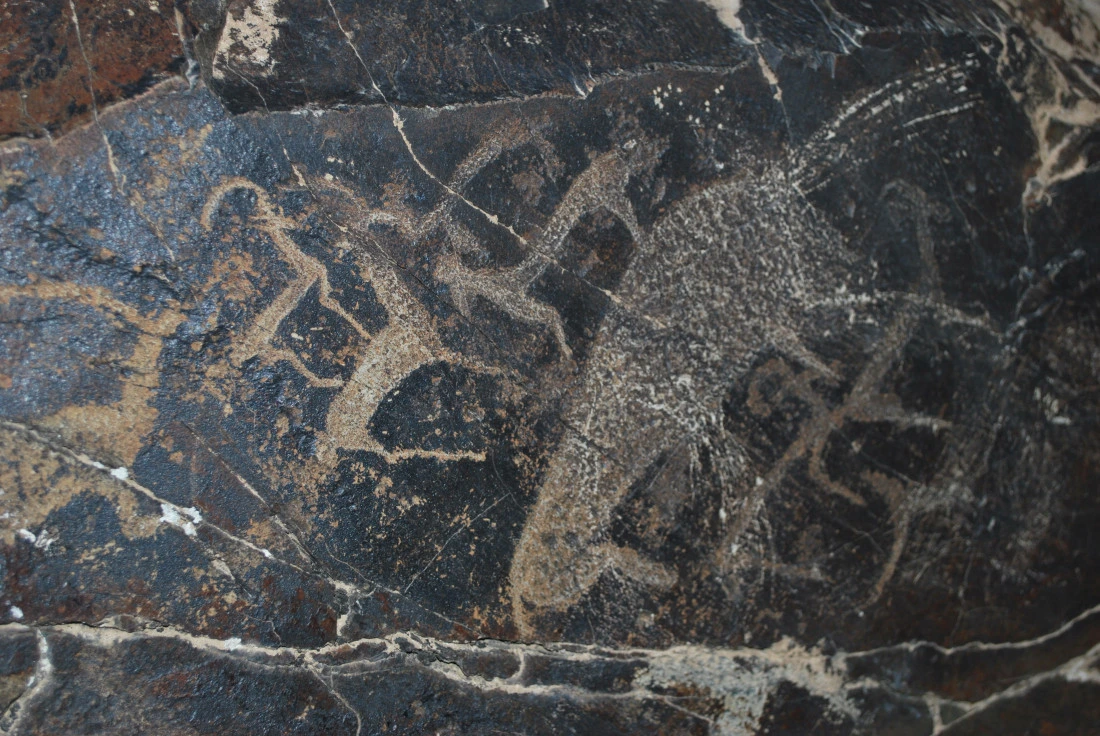
The Sarmyshsai gorge, in the Navoi region, is one of the most surprising places for those who want to understand the prehistory of Uzbekistan and the symbolic origin of art in Central Asia. This rocky landscape contains thousands of rock engravings carved on stone, a direct testimony of ancient communities that left their vision of the world marked in the rock.
The petroglyphs show scenes of hunting, animals, ritual figures and motifs of strong symbolic content, which makes the visit especially valuable for lovers of archaeology, ancient art and the deep history of the territory. It is one of those places where the traveler understands that the cultural heritage of Uzbekistan does not begin in the Islamic period, but much earlier.
For those seeking a different itinerary within cultural tourism in Uzbekistan, Sarmyshsai represents a singular proposal: less known than the great monumental cities, but of enormous historical value. Its nature as an open-air museum reinforces the idea that the country offers much more than madrasas and mausoleums.
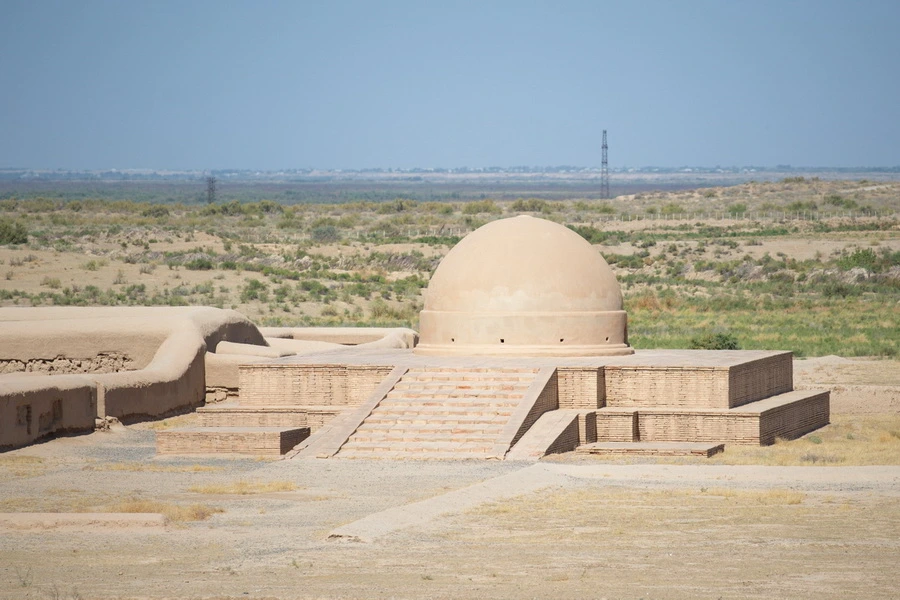
🕉️ Buddhist temples and Kushan heritage
Southern Uzbekistan, especially around Termez, preserves some of the most valuable testimonies of the Buddhist past of Central Asia. This historical dimension surprises many travelers, since it broadens the usual view of the country and shows to what extent it was a territory of contact, mixture and cultural exchange.
Sites such as Fayaztepa, Karatepa and Kampyrtepa show the importance of the Kushan world and of the routes that connected India, Bactria and other regions of the continent. These remains make it possible to understand the religious and intellectual plurality that existed in the territory long before the consolidation of Islam.
For the visitor interested in archaeological tourism in Uzbekistan, this Buddhist heritage adds a cultural layer of enormous interest. It not only enriches the trip, but also helps interpret the country as a civilization open to the passage of ideas, languages, religions and very diverse artistic forms.
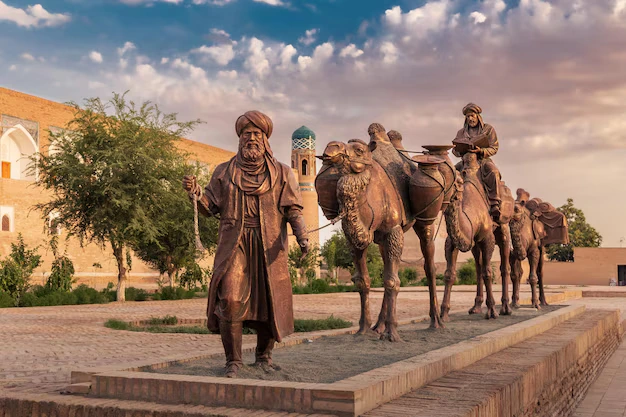
🛤️ Silk Road: multicultural legacy
The Silk Road is one of the absolute keys to understanding the historical value of Uzbekistan. For centuries, this territory was one of the great bridges between China, Persia, India, the Arab world and the Mediterranean, which turned its cities into first-rate commercial, intellectual, diplomatic and spiritual centers.
Cities such as Samarkand, Bukhara and Khiva flourished thanks to the passage of caravans, goods, knowledge and artistic styles. That is why traveling through Uzbekistan also means moving across a geography where cultural exchanges decisive for the history of Eurasia were born. Every monument, square and historic neighborhood preserves visible traces of that shared past.
The appeal of cultural tourism on the Silk Road lies precisely in that mixture: it is not only about monumental architecture, but about a living memory built through encounters between peoples, religions, techniques and different languages. Uzbekistan summarizes this multicultural dimension of history like very few countries do.
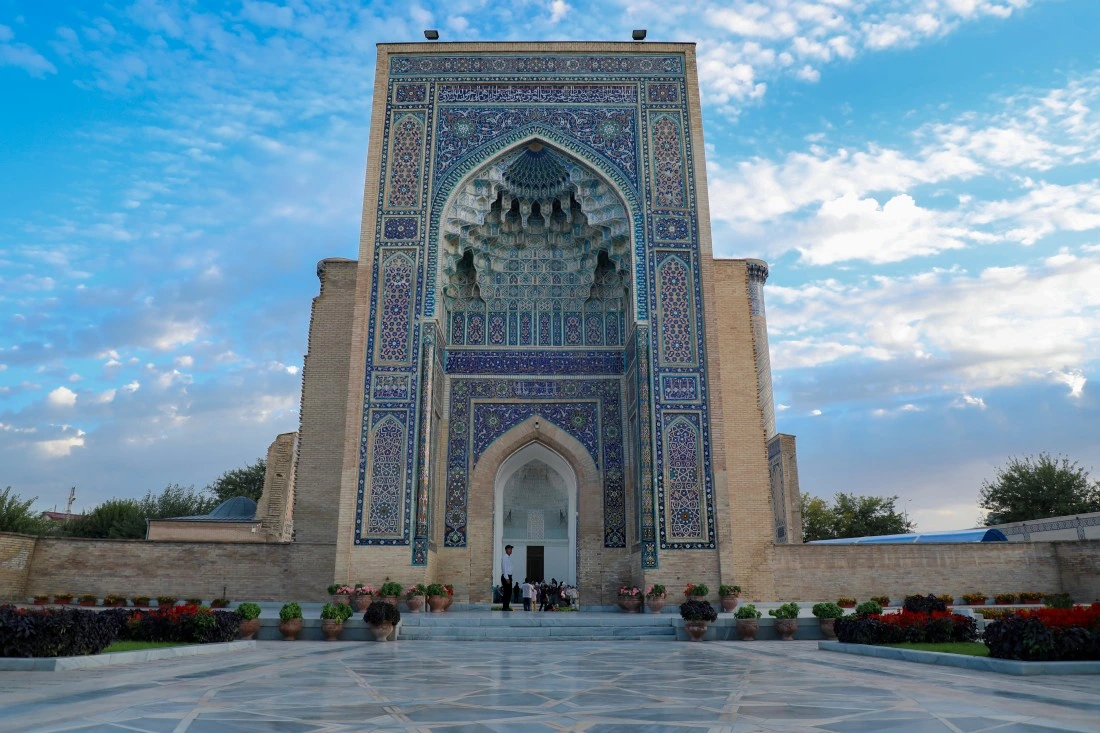
🏰 Timurid era and Islamic renaissance
The Timurid period constitutes one of the brightest stages of Uzbekistan’s cultural heritage. Under the leadership of Amir Temur and his successors, the region experienced an extraordinary architectural, artistic and scientific development that still defines the monumental image of cities such as Samarkand.
Places as emblematic as Gur-e Amir, Shah-i-Zinda or Registan Square reflect the greatness of that historical moment. Their turquoise domes, mosaics of exceptional precision, monumental portals and geometric compositions make Uzbekistan one of the best places in the world to admire Islamic architecture.
For the cultural traveler, the Timurid period not only offers visual beauty, but also historical depth: it shows how political power, religion, education and art came together to build a unique urban landscape. That heritage remains today one of the great driving forces of tourism in Uzbekistan.
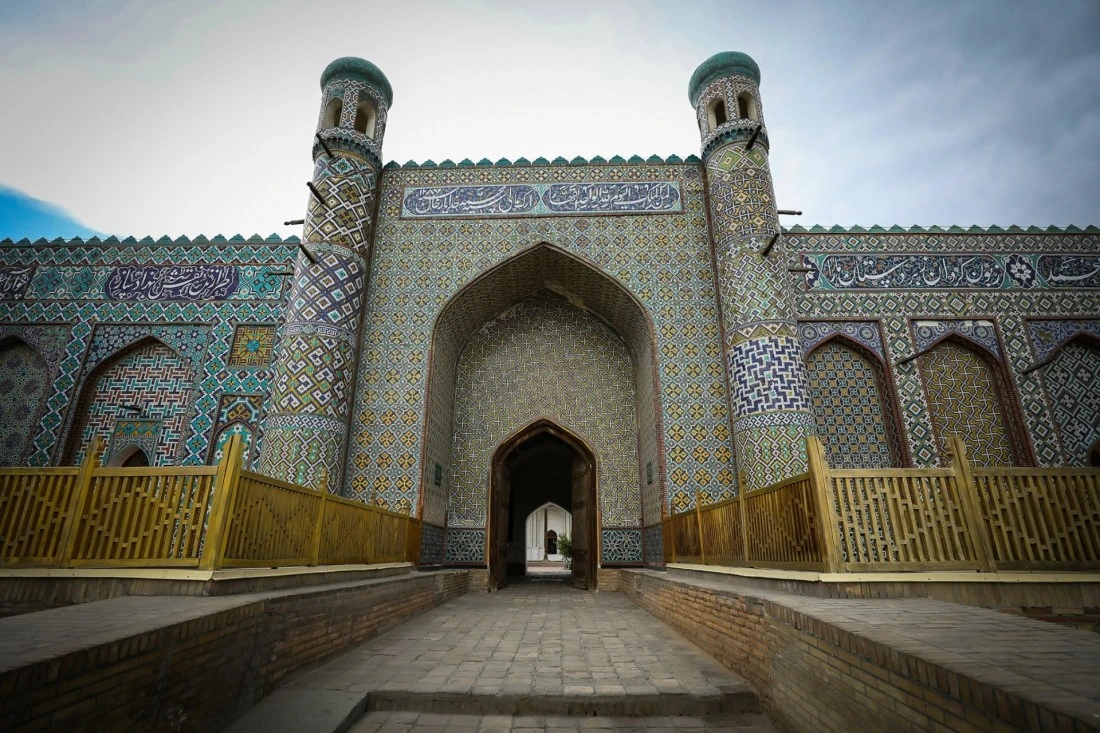
🏛️ Palaces and architecture of the khanates
Beyond the great madrasas and mausoleums, Uzbekistan preserves a valuable heritage linked to the former khanates of Kokand, Khiva and Bukhara. Their palaces show a more courtly and political vision of the country, revealing how power was organized, how luxury was expressed and how the representation of the State was built.
Buildings such as the Khudoyar Khan Palace, Tash-Khauli and Sitorai Mokhi Khosa allow visitors to discover another facet of cultural tourism in Uzbekistan: that of palace life, regional diplomacy, refined decoration and the coexistence between local and external influences.
These palaces help to understand that Uzbek heritage is not limited to the religious or caravan world, but also includes civil, ceremonial and residential architecture of enormous aesthetic and historical value.
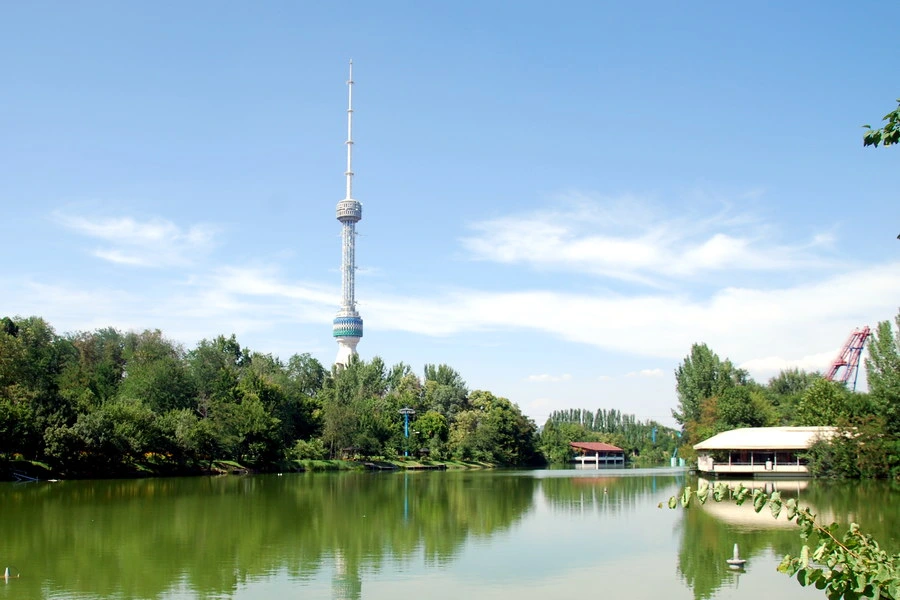
🏙️ Modern Uzbekistan: Soviet heritage and independence
The cultural journey through Uzbekistan does not end in antiquity or on the Silk Road. Tashkent, its capital, shows a different dimension of the country: wide avenues, monumental squares, architecture from the Soviet period, contemporary cultural centers and an urban image in constant transformation.
This part of the journey is especially interesting for those who want to understand the country’s complete evolution. Modern Uzbekistan combines historical memory and national identity, integrating its deep past with the cultural, urban and tourism projects of the present.
For the visitor, this contrast greatly enriches the experience: it shows that Uzbekistan is not only a great stage of the past, but also a living, dynamic country with its own cultural projection in the 21st century.
💡 Conclusion
Uzbekistan is, in many ways, a living museum on a countrywide scale. From prehistory and rock art to ancient Buddhism, the Silk Road, Timurid splendor, the architecture of the khanates and the modernity of Tashkent, everything forms part of one extraordinarily rich historical narrative.
Few destinations offer such a complete combination of cultural tourism, historical tourism, monumental heritage, archaeology, museums, artisanal tradition and the living continuity of memory. Traveling here is not only about visiting beautiful monuments: it is about understanding a civilization located at one of the most important cultural crossroads in the world.
If you are looking for a different destination, profound, visually impressive and full of content, cultural tourism in Uzbekistan is one of the strongest proposals in all of Central Asia and an unforgettable experience for any lover of history, art and the Silk Road.